Ayb Mechatronics Guide to Understanding Caterpillar Injector Codes
Sezer ÖzgürJun 11 2026
Ayb Mechatronics Guide to Understanding Caterpillar Injector Codes
Introduction
The caterpillar injector codes system is a fundamental part of modern Caterpillar diesel engine technology. These codes allow the Engine Control Module (ECM) to identify each injector’s unique calibration profile and adjust fuel delivery with high precision. Without correct injector coding, even high-quality injectors may fail to deliver optimal engine performance.
In engines such as the c7 caterpillar injector, c9 caterpillar injector, c12 caterpillar injector, c13 caterpillar injector, and c15 caterpillar injector, injector codes ensure that each cylinder receives the correct amount of fuel at the right time. This guide from Ayb Mechatronics explains how injector codes work, why they matter, and how to apply them correctly for reliable engine operation.
What Are Caterpillar Injector Codes?
Caterpillar injector codes are unique calibration values assigned to each injector during manufacturing or remanufacturing. These values represent the injector’s flow characteristics and performance differences.
Why Injector Codes Exist
Even when injectors are produced to the same specifications, small variations in manufacturing affect fuel flow. Injector codes compensate for these differences.
What Injector Codes Control
Injector codes help regulate:
Fuel injection timing
Fuel quantity per cycle
Spray pattern behavior
Cylinder balance
Emissions performance
Without correct coding, engine efficiency decreases noticeably.
How Caterpillar Injector Codes Work in the ECM
The ECM uses injector codes to fine-tune fuel delivery for each cylinder.
Step 1: Code Entry
Technicians enter caterpillar injector codes into the ECM after injector installation.
Step 2: Calibration Processing
The ECM stores and processes these values to adjust fuel mapping.
Step 3: Real-Time Control
During engine operation, the ECM continuously adjusts injector behavior based on load and speed.
Step 4: Performance Balancing
Each cylinder receives optimized fuel delivery for smooth engine operation.
When Are Injector Codes Required?
Injector Replacement
Every new or remanufactured injector requires correct coding.
Engine Overhaul
During rebuilds, all injector codes must be verified and updated.
ECM Replacement
A new ECM requires full injector code reprogramming.
Diagnostic Issues
Incorrect engine performance may indicate coding errors.
Common Problems Related to Injector Codes
Incorrect Code Entry
Wrong values can cause:
Rough idle
Poor fuel economy
Excess smoke
Engine misfire
Power loss
Missing Injector Codes
If injector codes are not entered, the ECM may default to generic fuel settings.
Mismatched Injector Positions
Assigning codes to the wrong cylinder leads to imbalance and vibration.
Diagnostic Process for Injector Code Issues
Step 1: Check ECM Fault Codes
Look for injector-related error messages in the system.
Step 2: Verify Code Accuracy
Compare installed injector codes with ECM entries.
Step 3: Monitor Engine Behavior
Observe:
Fuel consumption
Idle stability
Exhaust smoke
Power response
Step 4: Perform Cylinder Balance Test
This helps identify miscalibration or coding issues.
Step 5: Reprogram Injector Codes
Correct and re-enter caterpillar injector codes if necessary.
Caterpillar Engine Models Using Injector Codes
C7 Caterpillar Injector
The c7 caterpillar injector relies on precise coding for emissions control and efficiency.
C9 Caterpillar Injector
The c9 caterpillar injector requires accurate calibration for stable operation.
C12 Caterpillar Injector
The c12 caterpillar injector depends on correct coding for balanced combustion.
C13 Caterpillar Injector
The c13 caterpillar injector uses injector codes to maintain high-load performance.
C15 Caterpillar Injector
The c15 caterpillar injector requires precise coding due to heavy-duty operating conditions.
Benefits of Proper Injector Coding
Improved Fuel Efficiency
Accurate coding ensures optimal fuel usage.
Better Engine Balance
Each cylinder receives consistent fuel delivery.
Reduced Emissions
Proper combustion lowers exhaust output.
Increased Engine Life
Balanced operation reduces mechanical stress.
Stable Performance
Engine runs smoothly under all load conditions.
Tools Used for Injector Coding
Diagnostic ECM Software
Used to enter and manage injector calibration data.
Caterpillar Injector Adjustment Tool
Supports mechanical alignment before coding.
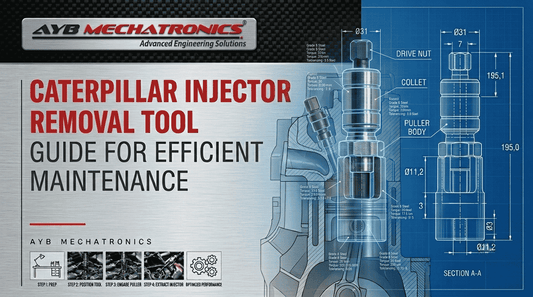
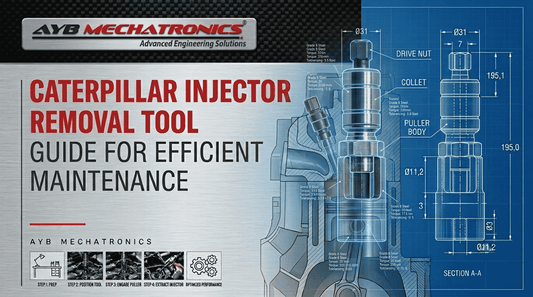
Caterpillar Injector Removal Tool
Used during injector replacement before coding procedures.
Caterpillar Injector Height Tool
Ensures correct installation positioning before calibration.
Step-by-Step Injector Code Programming
Step 1: Connect Diagnostic Tool
Access the ECM system using approved software.
Step 2: Enter Injector Codes
Input caterpillar injector codes for each cylinder correctly.
Step 3: Verify Data Entry
Double-check all values before saving.
Step 4: Save ECM Configuration
Store calibration data in the system.
Step 5: Test Engine Operation
Check:
Idle smoothness
Fuel consumption
Power response
Smoke levels
Comparison: Correct vs Incorrect Injector Coding
Factor
Correct Coding
Incorrect Coding
Fuel Efficiency
High
Low
Engine Stability
Smooth
Rough
Emissions
Controlled
Increased
Performance
Optimal
Reduced
Engine Wear
Lower
Higher
Common Mistakes in Injector Coding
Entering Wrong Cylinder Order
Misplacement leads to imbalance and vibration.
Using Incorrect Codes
Each injector has unique calibration data.
Skipping Verification
Failure to double-check leads to hidden issues.
Ignoring ECM Updates
Outdated software may cause compatibility issues.
Best Practices for Injector Code Management
Record All Injector Codes
Keep documentation for every injector installation.
Use Official Diagnostic Tools
Avoid unofficial software or tools.
Match Injector to Cylinder Correctly
Ensure proper assignment during installation.
Always Verify After Programming
Confirm engine performance after coding.
Real-World Example
A fleet operator experienced inconsistent fuel consumption across multiple Caterpillar engines. After inspection, technicians discovered incorrect injector coding during previous maintenance.
Once proper caterpillar injector codes were entered and verified, the fleet achieved:
Improved fuel efficiency
Balanced engine performance
Reduced emissions
Lower operating costs
This demonstrates how critical accurate injector coding is for system performance.
Why Choose Ayb Mechatronics
Ayb Mechatronics provides specialized expertise in diesel fuel systems and injector calibration.
Technical Expertise
We focus on Caterpillar injector systems and ECM programming accuracy.
Performance Optimization Focus
We help customers achieve:
Better fuel efficiency
Reduced downtime
Reliable engine performance
Lower maintenance costs
Practical Industry Experience
Our solutions are based on real-world diesel engine applications.
FAQ
What are caterpillar injector codes?
They are calibration values used by the ECM to control fuel delivery for each injector individually.
Why are injector codes important?
They ensure accurate fuel injection timing and quantity, improving efficiency and performance.
What happens if injector codes are wrong?
Incorrect codes can cause poor fuel economy, engine misfire, smoke issues, and reduced performance.
Do all Caterpillar engines use injector codes?
Most modern Caterpillar engines like C7, C9, C12, C13, and C15 require injector coding.
Can injector codes be reused?
No, each injector has unique calibration data that must be entered correctly.
What tools are used for injector coding?
ECM diagnostic software and approved service tools are required for programming injector codes.
We use cookies to enhance your browsing experience, serve personalized ads or content, and analyze our traffic. By clicking "Allow cookies", you consent to our use of cookies. More infor
Thanks for subscribing!
This email has been registered!
Sorry! Products are not enough.
Recipient email can't be blank.
Send on must be within 90 days from now
Thank you for registering! We will notify you by email when it is back in stock.